No, you should not heat or boil milk in a standard electric kettle—most manufacturers explicitly warn against it because milk scorches easily, foams and overflows, leaves hard-to-clean residue that can damage the heating element, and may void your warranty.
However, some specialized “milk boiler” or multi-function kettles with non-stick coatings, temperature control below 100°C/212°F, and dedicated milk modes make it safe and convenient.
| Preview | Product | |
|---|---|---|
|
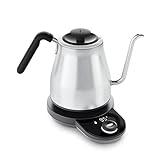
OXO Brew Pour Over Gooseneck Electric Kettle... | See Latest Price |

|
Viante Luxury Tea Set, Electric Kettle With... | See Latest Price |

|
Aarke Kettle - Electric Stainless Steel Tea... | See Latest Price |

|
SAKI Luna Pro Variable-Temperature Electric... | See Latest Price |

|
OXO Brew Adjustable Temperature Kettle,... | See Latest Price |
|
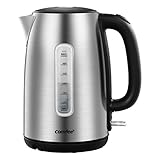
COMFEE' Stainless Steel Electric Kettle, 1.7... | See Latest Price |

|
Amazon Basics Electric Kettle with Glass... | See Latest Price |

|
Cosori Electric Kettle, No Plastic Contact... | See Latest Price |
For regular kettles, use a saucepan, microwave, or dedicated milk frother instead to avoid mess, burnt smells, and potential kettle failure.
Electric kettles are kitchen superheroes for boiling water in under 2 minutes, but milk is a completely different beast. Its proteins and fats behave nothing like pure water—they burn, foam explosively, and cling stubbornly.
This ultimate guide draws from manufacturer guidelines, real-user experiences, and appliance tests to answer every question: why it’s risky, when it’s okay, safe workarounds, cleaning hacks, and the best milk-friendly alternatives.
Why Most Electric Kettles Aren’t Made for Milk
Standard electric kettles are engineered exclusively for water:
- Rapid, uneven heating — Powerful 1500–3000W elements create intense hot spots at the base. Water circulates naturally, but milk’s proteins (casein) denature and stick, forming a burnt layer that insulates the sensor and can overheat the element.
- No proper shut-off for milk — Auto shut-off relies on steam hitting a bimetallic strip or sensor. Milk produces little steam and lots of foam, so the kettle keeps running while milk scorches or boils over.
- Foaming and overflow — Milk expands dramatically (up to 3–4x volume) when heated, spilling out the spout/lid and potentially into electrical components.
- Residue nightmare — Burnt milk leaves a film that’s nearly impossible to remove completely from concealed elements, causing off-flavors in future water and gradual efficiency loss.
- Warranty void — Brands like Cuisinart, Breville, Smeg, and OXO state “water only”—milk damage isn’t covered.
In short: One innocent cup of hot milk can turn your kettle into a burnt-milk-flavored water boiler… or kill it entirely.
Risks vs. Benefits Table
| Aspect | Standard Electric Kettle | Milk-Safe/Multi-Function Kettle |
|---|---|---|
| Scorching/Burning | Very high (proteins stick to element) | Low (non-stick + gentle heating) |
| Overflow/Spillage | Almost guaranteed | Minimal (wider base + foam control) |
| Cleaning Difficulty | Extremely hard (concealed element) | Easy (non-stick + removable parts) |
| Flavor Transfer | Yes—future tea/coffee tastes burnt | None |
| Warranty Safe | No | Yes |
| Best For | Water only | Milk, baby formula, soup, tea |
When It’s Actually Safe: Milk-Friendly Kettles
A growing number of “milk boilers” or multi-cook kettles are designed exactly for this:
- Non-stick coated interior (PTFE-free)
- Precise temperature control (40–100°C)
- Wider base for even heating
- Keep-warm function without boiling
- Easy-clean removable lid/base
Top Recommended Milk-Safe Electric Kettles
| Model | Capacity | Key Features | Price Range | Best For |
|---|---|---|---|---|
| Bear 1.5L Multi-Function Kettle | 1.5L | Non-stick, 40–100°C settings, milk mode | $40–60 | Daily milk + baby formula |
| Deerma/Mi Multi-Cooker Kettle | 1.5L | 8 presets (milk, yogurt, soup), keep warm | $50–80 | Families, Asian cooking |
| V-Guard VKM15 Milk Boiler | 1.5L | Auto shut-off at 90°C, double-layer | $45–70 | Indian households (chai) |
| Morphy Richards Impresso | 1L | Stainless non-stick, milk-specific mode | $60–90 | Small households |
| Philips HD4608/70 | 0.8L | Energy-efficient, gentle heat | $50–75 | Baby milk/formula |
These models heat milk perfectly without scorching or overflow—many Indian/Asian brands dominate because boiling milk for chai is daily life there.
How to Safely Heat Milk in a Standard Kettle (If You Must)
Desperate for hot milk and only have a regular kettle? Follow this emergency method at your own risk:
- Fill only 1/3–1/2 capacity (prevents major overflow).
- Leave lid OPEN.
- Use lowest power setting if variable.
- Stay nearby and watch constantly.
- When foam rises near top, immediately unplug/lift off base.
- Stir gently with long-handled spoon.
- Add pinch of baking soda or butter to reduce foaming (old Indian trick).
- Clean IMMEDIATELY (see below).
Still not recommended—95% of horror stories come from this.
Better Alternatives: Heat Milk Without Ruining Your Kettle
Method 1: Stovetop (Best Control)
- Heavy-bottom saucepan on low-medium heat.
- Stir constantly.
- Remove just before boiling (small bubbles at edges = 80–90°C).
Method 2: Microwave (Fastest)
- Microwave-safe mug, 1-minute bursts, stir between.
- Perfect for single servings.
Method 3: Dedicated Milk Frother/Warmer
- Brands like Nespresso Aeroccino, Secura, or Golde heat + froth perfectly in 60–90 seconds.
Method 4: Double Boiler (Gentlest)
- Bowl over simmering water pot—zero scorching risk.
How to Clean Milk Residue from Your Kettle (If Disaster Strikes)
- Fill with equal parts water + white vinegar, boil, let sit 1 hour.
- Add 2 tbsp baking soda—fizzing lifts burnt bits.
- Scrub gently with non-abrasive sponge.
- Repeat 2–3 times.
- Final rinse with lemon juice water to remove odor.
For concealed elements: Multiple vinegar boils + long soaks are your only hope.
Frequently Asked Questions
Is it completely impossible to heat milk in a regular electric kettle?
No, it’s possible—but strongly discouraged for standard models. Milk scorches because proteins and fats stick to the high-powered heating element, creating hot spots that burn while the rest stays cooler. The kettle’s steam-based shut-off also fails with milk (little steam, lots of foam), so it keeps heating and can overflow dramatically or damage the element over time.
Many users have destroyed kettles this way—the burnt layer insulates the sensor, causing overheating, strange smells, and eventual failure. Even if you succeed once, residue lingers and flavors future water/tea horribly. Manufacturers like Breville, Cuisinart, and Smeg explicitly say “water only” in manuals and warranties. The 5% who claim success usually have temperature-controlled models or watch like hawks. Bottom line: The convenience isn’t worth potentially trashing a $50–200 appliance.
What happens if I accidentally boil milk in my electric kettle?
You’ll get a volcano of foam spilling everywhere, burnt milk crust on the bottom, and a lingering scorched smell that ruins tea/coffee for weeks. In worst cases: the heating element overheats (insulated by burnt milk), the thermostat fails, or milk seeps into electronics causing short-circuit or permanent damage.
Real stories abound—people have melted plastic parts, tripped breakers, or needed complete replacement. The foam rises 3–4x faster than water and exits spout/lid vents. Cleaning is brutal: vinegar + baking soda soaks help, but concealed elements often stay tainted forever. One boil-over can turn your pristine kettle into a burnt-milk machine.
Are there electric kettles specifically designed for boiling milk?
Yes—especially popular in India/Asia where daily chai requires boiled milk. These “milk boilers” have non-stick interiors, gentle heating (no exposed coil), temperature caps at 90–95°C, wider bases, and anti-foam designs. Top models include Bear, V-Guard, Prestige, and Morphy Richards milk-specific lines.
They heat milk perfectly without scorching or overflow, often with keep-warm functions. Western equivalents are multi-cook kettles (e.g., Xiaomi Mi Smart Kettle Pro) with milk/yogurt modes. Look for “non-stick milk boiler” or “multi-function temperature control kettle”—they’re life-changing for hot chocolate, baby formula, or turmeric milk fans.
Why does milk overflow so easily in electric kettles?
Milk contains proteins that form a skin on top as it heats, trapping steam underneath. When pressure builds, the entire contents erupt upward—unlike water that just bubbles. Electric kettles heat aggressively from the bottom with no stirring, creating rapid foam expansion.
Standard kettles have narrow spouts and sealed lids that can’t vent foam fast enough. The result: milk shoots out like a geyser in seconds once it hits ~80°C. Traditional stovetop boiling allows stirring and wider surface area to break the skin and release steam gradually.
Can I warm (not boil) milk in an electric kettle safely?
Warming to 60–70°C is slightly safer than full boiling but still risky in standard kettles. You avoid massive overflow but still get protein sticking and residue. Variable-temperature kettles (e.g., with 60–80°C settings) are better, but even then manufacturers advise against milk.
For baby formula or hot drinks, dedicated warmers or temperature-controlled milk kettles are far superior—no scorching, precise temps, and easy cleaning.
Will heating milk once void my kettle warranty?
Almost certainly yes—most warranties exclude “misuse” and specifically state water only. If damage occurs (burnt element, strange smells, failure to shut off), manufacturers will deny claims when they see milk residue.
Some users report successful warranty replacements by thoroughly cleaning first, but it’s dishonest and risky. Better to use the right tool from the start.
Conclusion
The honest answer remains: Don’t heat milk in a regular electric kettle unless you’re prepared for mess, burnt smells, and potential appliance death. The science of milk simply doesn’t play nice with standard kettle design.
Invest in a proper milk boiler (under $60 for excellent ones) or stick to stovetop/microwave for occasional use. Your kettle (and your morning tea) will thank you, and you’ll avoid the universal regret of thousands who learned the hard way. Hot milk is wonderful—just give it the respect (and the right appliance) it deserves!