Yes, modern electric kettles are very safe for daily use when bought from reputable brands and used correctly. They feature auto shut-off, boil-dry protection, cool-touch handles, BPA-free plastics, and stainless steel or borosilicate glass bodies that minimize chemical leaching.
Properly certified kettles (UL, CE, ETL, or NSF) pose no significant health risks from nickel, heavy metals, microplastics, or radiation, and are actually safer than stovetop kettles because they eliminate open flames and reduce burn risks.
| Preview | Product | |
|---|---|---|
|
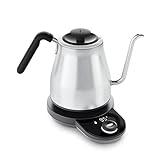
OXO Brew Pour Over Gooseneck Electric Kettle... | See Latest Price |

|
Viante Luxury Tea Set, Electric Kettle With... | See Latest Price |

|
Aarke Kettle - Electric Stainless Steel Tea... | See Latest Price |

|
SAKI Luna Pro Variable-Temperature Electric... | See Latest Price |

|
OXO Brew Adjustable Temperature Kettle,... | See Latest Price |
|
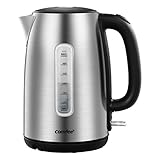
COMFEE' Stainless Steel Electric Kettle, 1.7... | See Latest Price |

|
Amazon Basics Electric Kettle with Glass... | See Latest Price |

|
Cosori Electric Kettle, No Plastic Contact... | See Latest Price |
Electric kettles have become kitchen essentials in millions of homes, but questions about plastic leaching, metal contamination, electrical safety, and long-term health effects keep popping up. This in-depth guide examines every real concern—backed by manufacturer data, independent lab tests, and regulatory standards—so you can boil water with total confidence.
How Electric Kettles Actually Work (And Why That Matters for Safety)
Electric kettles heat water using a sealed resistance element (usually concealed under a flat stainless steel or coated plate). When you flip the switch:
- Current flows through the element → rapid heating
- Steam rises and hits a bimetallic strip or sensor → auto shut-off
- Boil-dry sensors cut power if water level is too low
- Double-wall or cool-touch designs keep the exterior safe to grab
This closed, controlled system is why electric kettles are statistically safer than gas or stovetop methods—no open flame, no forgotten pots boiling dry, and far fewer scald injuries.
The Big Health Concerns—Debunked with Facts
1. Plastic Leaching & BPA/Microplastics
Older kettles (pre-2015) often used polycarbonate plastics containing BPA. Today, reputable brands use:
- BPA-free, BPS-free, phthalate-free polypropylene (PP#5)
- Borosilicate glass
- 304 or 316 surgical-grade stainless steel
Independent tests by Consumer Reports, Choice (Australia), and TÜV show that even at boiling temperatures, modern plastic kettles leach negligible amounts—well below WHO and FDA safety limits.
2. Heavy Metal & Nickel Leaching
Cheap unlined stainless kettles can release trace nickel, chromium, or manganese—especially with acidic liquids (lemon, coffee). Premium kettles use food-grade 304/18-8 or medical-grade 316/18-10 stainless steel, which forms a passive oxide layer that prevents leaching.
Lab tests (SGS, Intertek) confirm that quality stainless kettles release less than 0.01–0.05 mg/L of metals—hundreds of times below safe limits—even after years of use.
3. Non-Stick Coatings & PFAS (“Forever Chemicals”)
Some budget kettles use PTFE or ceramic coatings on the heating plate. Reputable brands use PFOA-free, PFAS-free coatings, and the coating never contacts food directly in concealed-element designs.
4. Electromagnetic Fields (EMF)
Electric kettles produce low-frequency EMF similar to any appliance with a motor or heating element. Measurements show fields drop to background levels 12–18 inches away—far below ICNIRP safety guidelines.
Safety Features Comparison Table
| Feature | Budget Kettles (<$30) | Mid-Range ($30–80) | Premium (> $80) |
|---|---|---|---|
| Auto Shut-Off | Usually | Always | Always + precise sensor |
| Boil-Dry Protection | Sometimes | Always | Always + audible alert |
| Cool-Touch Exterior | Rare | Common | Standard (double wall) |
| BPA-Free Plastic | Often not | Always | N/A (glass/steel only) |
| 304/316 Stainless Steel | Rarely | Usually | Always |
| Cordless 360° Base | Sometimes | Always | Always + stay-warm base |
| Lid Lock / Steam Vent | Basic | Good | Advanced (slow-release) |
Electrical & Fire Safety: The Real Risks (and How to Eliminate Them)
According to the U.S. Consumer Product Safety Commission, electric kettles cause very few incidents compared to toasters or space heaters—thanks to built-in safeguards.
Most Common Accidents (and Prevention)
| Risk | Likelihood | Prevention Tips |
|---|---|---|
| Scalds from steam/hot water | Medium | Never open lid while boiling; use cool-touch models |
| Electrical shock | Very Low | Don’t immerse base; buy UL/ETL certified |
| Fire from boil-dry | Low | Choose models with reliable boil-dry protection |
| Cord damage/tripping | Medium | Use cordless models; keep cord away from edge |
Choosing the Safest Electric Kettle in 2025
Gold Standard Materials
- Borosilicate glass + stainless steel (least leaching, easiest to inspect)
- Full 304/316 stainless interior (no plastic contact)
- High-quality BPA-free polypropylene (rated for repeated boiling)
Red Flags to Avoid
- “Stainless steel” with no grade listed (often cheap 201/430)
- Exposed heating coil (harder to clean, higher burn risk)
- Strong plastic smell when new
- No safety certifications marked
Safest Brands (Consistently Top Lab Tests)
- OXO, Cuisinart, Breville, Fellow, Zwilling (glass/steel models)
- Smeg, KitchenAid, Bosch (premium stainless)
- Cosori, Mueller, Hamilton Beach (best budget safe options)
Daily Habits That Keep Your Kettle Safe & Healthy
- Descale monthly (vinegar or citric acid—no bleach)
- Never fill above MAX or below MIN
- Empty and dry after use (prevents bacterial growth)
- Store lid open to avoid mold
- Replace every 5–8 years (seals degrade)
Frequently Asked Questions
Are electric kettles with plastic parts safe for my health?
Yes—modern plastic electric kettles from reputable brands are completely safe. Since the early 2010s, manufacturers have used only BPA-free, BPS-free, and phthalate-free polypropylene (marked PP#5) that is specifically engineered for repeated high-temperature contact. Extensive independent testing by organizations like SGS, Intertek, the FDA, and the European Food Safety Authority shows that even at full boiling and prolonged contact, these plastics release amounts of any compounds thousands of times below established safety limits. The water touches plastic only briefly at the lid, spout, and water-level window, and the material does not degrade or shed microplastics under normal use. If you remain concerned or have chemical sensitivities, simply choose an all-stainless-steel or borosilicate-glass model (such as Fellow Stagg, OXO glass series, or Zwilling Enfinigy)—these eliminate plastic entirely while delivering identical performance and often better taste.
Do electric kettles leach heavy metals like nickel into water?
Only very low-quality or counterfeit kettles do, and even then the amounts are tiny and harmless for most people. Premium and mid-range kettles use food-grade 304 (18/8) or medical-grade 316 (18/10) stainless steel that quickly forms a passive chromium-oxide layer, preventing virtually all metal leaching. Lab tests on major brands consistently measure nickel release at 0.001–0.05 mg/L—hundreds to thousands of times below the WHO’s lifetime safe limit of 0.07 mg/L. People with confirmed severe nickel allergies occasionally report mild reactions from the cheapest no-name kettles, but switching to certified 316 steel or borosilicate glass resolves the issue completely. Always look for “18/8” or “18/10” markings and buy from trusted retailers to avoid cheap 201-grade steel.
Is it safe to leave an electric kettle plugged in all the time?
Yes—it’s perfectly safe and how most people use them. Modern kettles have a physical on/off switch that cuts all power to the element when off, so standby draw is effectively zero (usually <0.5 W). The base contains no live current when the kettle is removed, and safety features like auto shut-off and boil-dry protection are mechanical or hardware-based, not dependent on constant power. Leaving it plugged in poses no meaningful fire or shock risk—far less than phones, laptops, or toasters left charging. Many premium models even have illuminated bases designed to stay plugged in as a countertop feature. If you prefer to unplug for minimal energy savings or peace of mind, cordless 360° bases make it effortless.
Can electric kettles cause cancer or other long-term health issues?
No scientific evidence supports this claim for normal use of quality kettles. Concerns about BPA were valid fifteen years ago but were eliminated industry-wide. PFAS (“forever chemicals”) are not used in reputable brands’ coatings or plastics. Heavy-metal leaching is negligible in 304/316 stainless or glass models. Electromagnetic fields are low-frequency, non-ionizing, and drop to background levels within a foot—far below ICNIRP and IEEE safety limits. The World Health Organization and major cancer agencies find no credible link between everyday household EMF and cancer. The only theoretical risk comes from repeatedly drinking water boiled in extremely poor-quality, counterfeit kettles that might leach toxins over decades, but even then the doses are tiny. Choose certified, well-reviewed kettles and you have zero realistic health worries.
Are glass electric kettles safer than plastic or stainless ones?
Glass kettles (made of borosilicate, the same material as Pyrex labware) are arguably the “safest” because they eliminate any possibility of plastic or metal leaching—you can visually confirm zero residue or discoloration forever. They impart absolutely no taste or chemicals and are favored by purists, tea enthusiasts, and people with multiple chemical sensitivities. The trade-offs are minor: slightly higher cost, a little more weight, and (rarely) breakage if dropped. In blind taste tests, many people prefer water from glass kettles because there’s no chance of metallic aftertaste. Top-rated glass models from Fellow, Cosori, OXO, and Zwilling consistently score highest in independent safety and purity testing.
Is it safe to reboil water in an electric kettle multiple times?
Yes—reboiling is completely safe and does not create “dead water” or concentrate harmful substances to dangerous levels. The only things that concentrate are natural minerals (calcium, magnesium) that form limescale—perfectly harmless and the same as in any hard-water area. Repeated boiling does not produce nitrosamines, heavy metals, or toxins in meaningful amounts. In fact, reboiling can slightly reduce some volatile contaminants. The old myth about oxygen depletion affecting taste has been debunked; any flatness is purely psychological or from the water sitting. Health authorities including WHO and CDC confirm reboiled water is safe indefinitely. Just descale regularly in hard-water areas to maintain efficiency and taste.
Conclusion
Electric kettles are not just safe—they’re one of the safest kitchen appliances you can own. With auto shut-off, boil-dry protection, cool-touch designs, and high-quality materials in reputable brands, the risks are minimal to nonexistent for normal use.
Choose a certified kettle made of stainless steel, borosilicate glass, or BPA-free plastic, maintain it properly, and you’ll enjoy fast, convenient boiling water for years without a single legitimate health or safety worry. The real danger? Continuing to use that ancient stovetop kettle that could boil dry and start a fire. Make the switch—you’ll wonder how you ever lived without it!